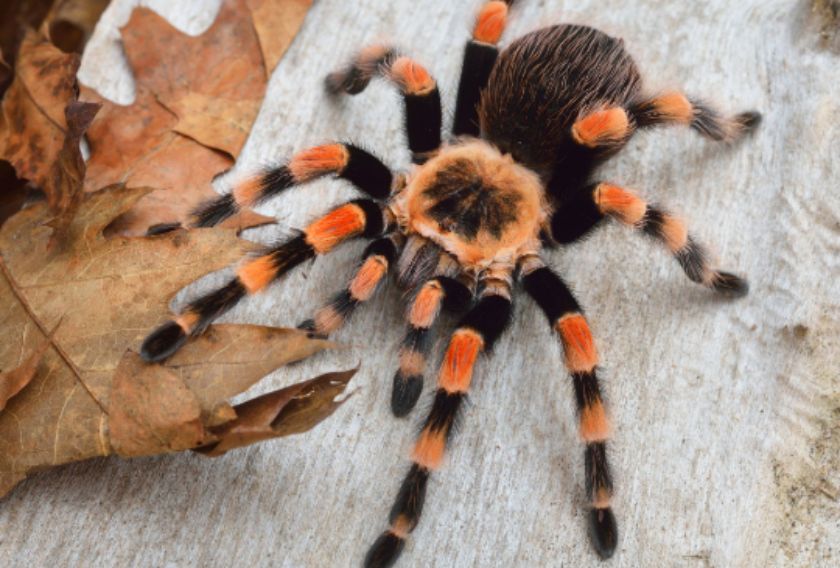
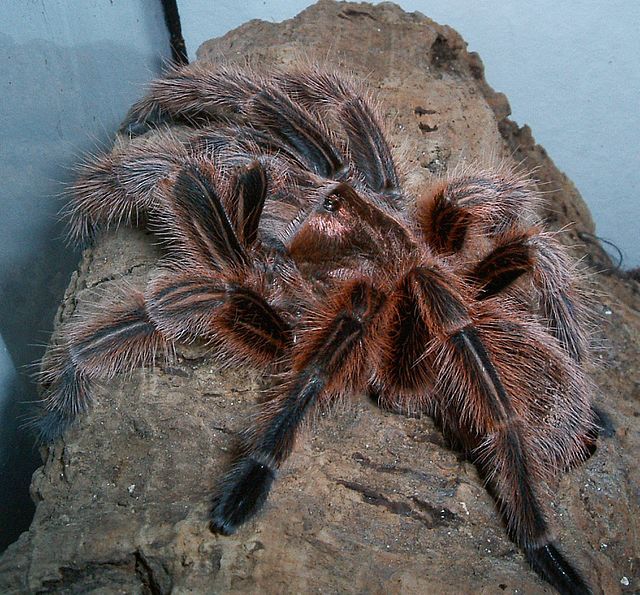
Chilean Rose Tarantula is also known as the Rose Hair Tarantula with the scientific name Grammostola Rosea. It is one of the most popular pet tarantula species due to its docile and calm nature. Its velvety exoskeleton with hues ranging from light brown to pinkish red makes it more attractive and cute. In the world of arachnids, the Chilean Rose tarantula requires very little attention from the keeper as it needs to be fed less frequently.
Moreover, Chilean tarantulas are inexpensive and easily available. Rose hair tarantula is native to the Grasslands of Chile but is also found in the regions of Bolivia, Argentina, and South America therefore, it is also termed as a New World Tarantula. A New World Tarantula is not as agile, which is another factor for keeping them as a pet.
This exotic species is easily recognized by its dense hair on its whole body which is used for either making a grip on varied surfaces, combing silk, as a sensory organ, or for its self-defense. The tarantula has eight hairy legs along with two pedipalps which are armlike appendages near its front side. These additional legs are used as sensory organs and manipulators.
Male Vs Female Chilean Rose Tarantula

The male and female tarantula can be recognized through certain attributes of their body length, leg span, overall appearance, and behavior.
Both male and female Rose Hair Tarantulas are slow-growing spiders and take around two to three years to reach sexual maturity.
The rose-haired male has a slim body with longer legs along with claspers on the front leg to hold the female during mating. The duration of the mating process is about 30 seconds.
The behavior of Rose Hair Tarantula
Chilean tarantula is adored for its calm and docile nature. The Spiders do not have feelings so it is more likely that they will not make an emotional bonding with you, unlike other pets such as dogs and cats. These friendly creatures are cute, cuddly, and calm when handled which makes them a fascinating classroom pet. It is quite tolerant of variations in its surroundings.
Tarantulas have a venomous bite but its venom doesn’t cause any serious harm to humans. The tarantula’s principal defense is their ability to spray irritating urticating hairs. As this species of tarantula is human-friendly, it prefers to run away rather than using its defense mechanism. You will forget your arachnophobia with this fascinating arachnid as your pet!!
How to take care of a Chilean Rose Tarantula?
Taking care of a Chilean Rose Tarantula involves providing an adequate habitat with proper feeding, the right environment, and handling with care. Here’s a detailed care sheet to help you ensure the well-being of your eight-legged companion. The rose hair tarantula is a beginner-friendly tarantula.
Exercise
Like any other animal, the Chilean Rose tarantula also needs physical exercise for its optimum growth and fitness. A sufficiently large enclosure of the tarantula provides it enough space for roaming and burrowing, and it does not require excessive exercise.
Grooming
The Chilean Rose Tarantula undergoes a process of “molting” , in which it sheds its exoskeleton. This natural process of molting keeps it well-groomed and is required for the growth of your tarantula.
Up Keep Cost
The Rose Tarantula is a low-maintenance tarantula and requires to be fed less frequently. The amount for its feed can be around $10-$20 per month which can be further reduced by raising the crickets on your own rather than getting from a pet store. Moreover, there can be some expenses for changing the substrate and broken items. Also budget for the cost of the veterinary services and emergency conditions.
Habitat for Tarantula
The natural habitat of the Rose tarantula is the high desert, and these are the burrowing species of tarantula. The enclosure of the tarantula should replicate the natural environment with adequate temperature and humidity levels.
A glass or plastic terrarium of nearly 10-gallon capacity with a deep layer of substrate should be used for adult tarantulas and a small container is preferred for spiderlings and baby tarantulas.
Enclosure With Magnetic Lock System
The terrarium of the tarantula should be well secured so as to avoid any escape. The magnetic lock system is a good option for it. It should have a secure lid that avoids any escape along with a movable system to serve food.

Enclosure With Hideouts
The crib should have some hideout, such as half logs, cork bark, or artificial shelters to provide a sense of security to your tarantula.

Enclosure With Abg Mix
It should have a secure lid that avoids any escape along with a movable system to serve food. The house of the tarantula should be well-ventilated. The base of the tarantula cage can be made with coconut mulch, organic soil and ABG mix(A premix bag that contains finely ground tree fern fiber, milled long fiber sphagnum moss, milled sphagnum peat moss, fine charcoal, and fine fir bark. The bag is made individually guaranteeing the correct ratios). The Rose tarantula does well at room temperature of 70-75 degrees Fahrenheit.

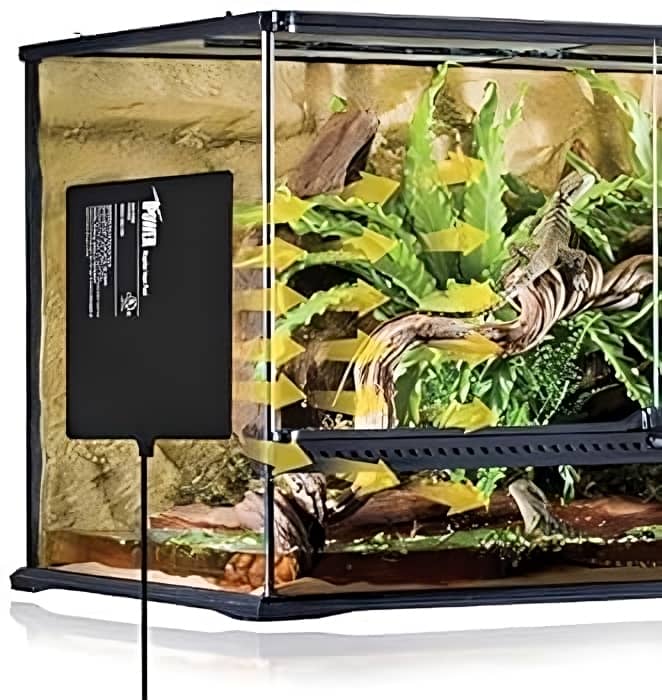
Enclosure With A Heat Pad
If the temperature drops during nighttime, a heat mat can be used on one side of the glass enclosure. The humidity level in the tarantula crib should be around 65% and should be checked with a humidity gauge. The light color of the substrate is an indication of the dryness and misting with distilled water restores the moisture levels.
What does a Rose Hair Tarantula eat?
Tarantulas are wonderful nocturnal hunters, and they use their unmatched senses to judge variations in the vibrations produced by their prey. In captivity, there is a need to balance the diet of a tarantula by providing a variety of insects, as each of these has different nutritional values
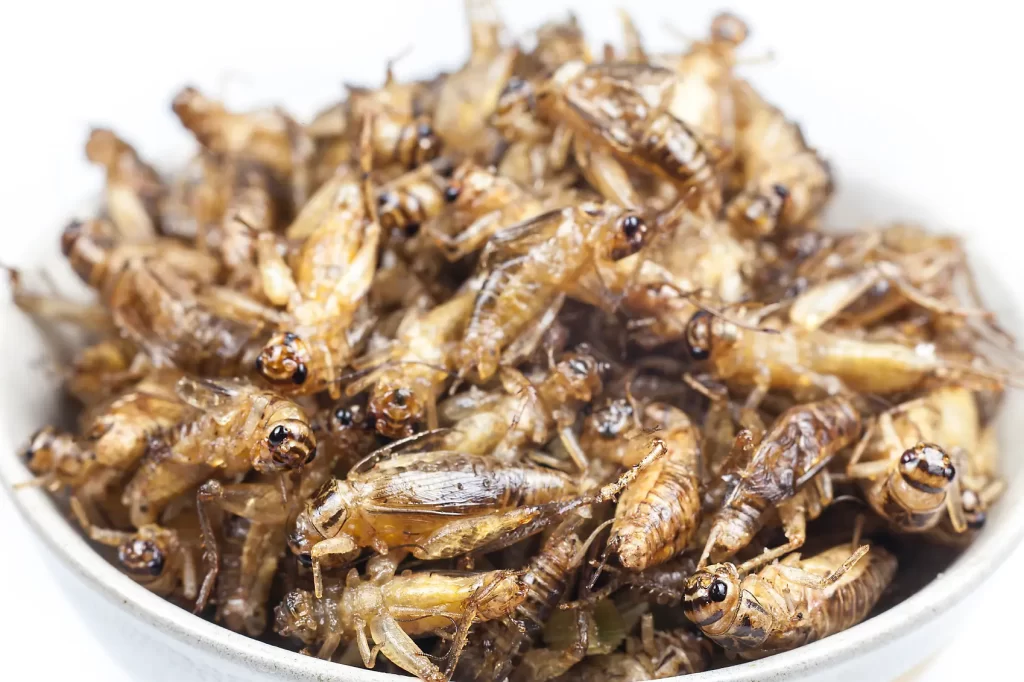
Chilean Rose Tarantula loves to have crickets, mealworms, waxworms, hornworms, phoenix worms, Dubia roaches, and flightless fruit flies.
- Crickets are a very popular food choice for tarantulas and are easy to find at your local pet store. Vita-Bugs crickets have high nutritional content and are enhanced with vitamin E, vitamin A, beta-carotene, omega-6, and omega-3 fatty acids
- Dubia roaches are also a good option which contain up to 28% protein and can make a good meal for larger tarantulas. The amount of roaches to be given to a tarantula depends on its size and age.
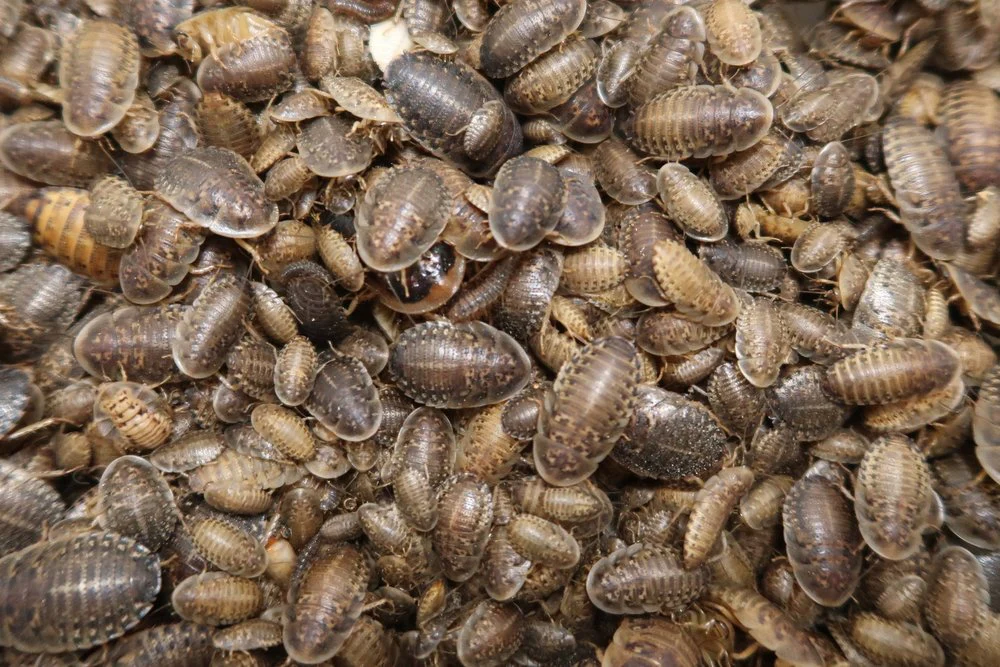
- Waxworms and Mealworms are rich in calcium, phosphorus, and protein but due to large fat content, the amount to be fed should be regulated

Diet Schedule of Rose Hair Tarantula
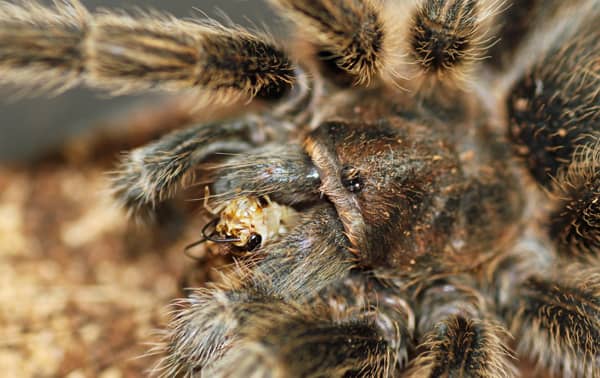
As the tarantulas are nocturnal hunters, it is always advisable to provide live food to it rather than serving a pre-killed dinner. The spiderlings can enjoy pre-killed food, but adult tarantulas like to hunt. The amount to be fed in a given interval of time depends on the size of the tarantula and its growth state. Tarantula shows rejection of food during molting, change of habitat, and in a state of stress. The uneaten food should be removed from its enclosure as it may cause stress and injury to your tarantula.
How to Handle Your Tarantula
While Chilean Rose Tarantulas are generally docile, it’s best to limit handling to reduce stress. Handling a tarantula should not bring any kind of stress to your tarantula.Some individuals may be more tolerant than others. When handling is necessary, try to approach the tarantula gently from the side and avoid sudden movements. If needed, encourage the tarantula to move using a soft brush rather than your hands.
One should not exhale or blow on to the tarantula as moving air will spook it and make it more stressed. You will notice that your tarantula is raising and exposing its fangs under stress. If you observe a shrunken abdomen with a wrinkled appearance, it is an indication of dehydration.
What Is Molting?
Molting of a tarantula is an important stage in its growth. During molting, a spider will emerge from its old exoskeleton, revealing a new, larger exoskeleton underneath. The process is necessary for spiders to accommodate their increasing size as they grow. Molting also allows spiders to repair damaged body parts and replace lost or worn-out organs and tissues.
The exact triggers for molting in spiders can vary, but common factors include hormonal changes, nutritional status, and available space for growth. As a spider grows, it reaches a point where its current exoskeleton becomes too small and restrictive, prompting the molting process to begin.
It’s important to note that molting can be a vulnerable period for spiders as they are temporarily soft and more susceptible to predation. After molting, spiders will typically wait for their new exoskeleton to harden before resuming normal activities.
You should also pay attention when your tarantula is preparing to molt. There are some significant changes which are easy to note and act accordingly for the safe and successful molting process for your tarantula.
Extra care is needed during the process of molting in which a tarantula sheds its skin. One should never hold a tarantula after molting as its skin is quite tender and food should not be given for at least three days after molting as touching the food may also be fatal.
Some Interesting Facts About Rose Tarantula
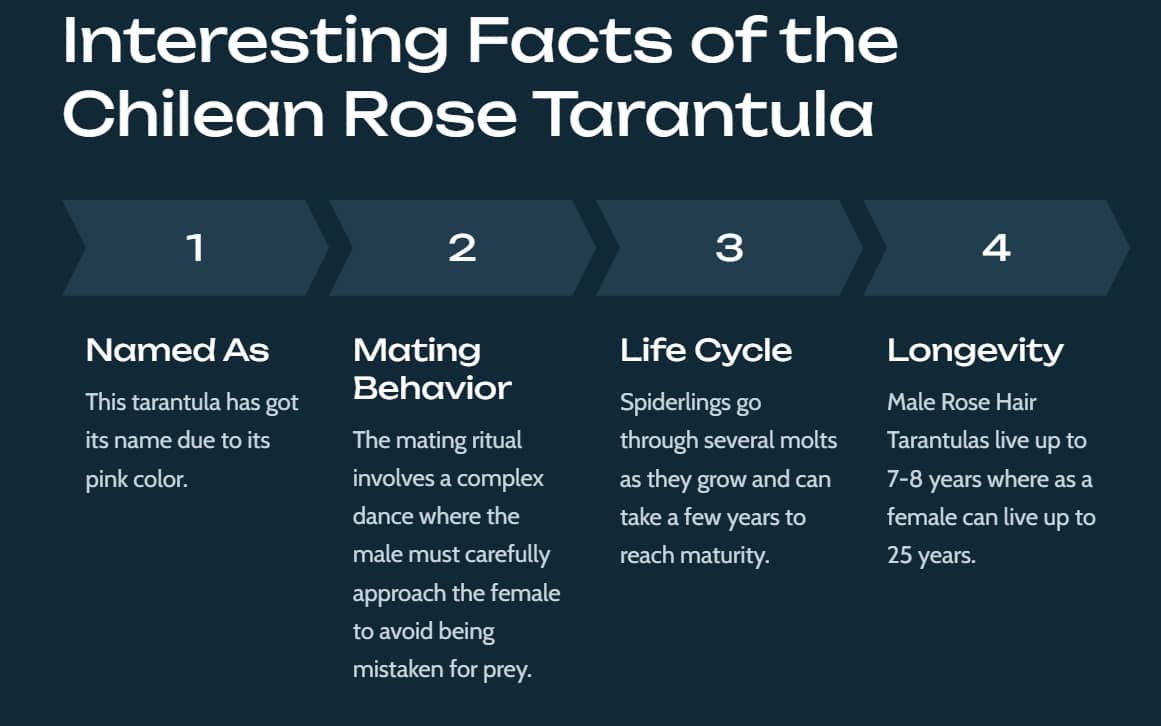
- This tarantula has got its name due to its pink color.
- This New World tarantula does not require much space to live in comparison to an Old World tarantula.
- The old world tarantula has a more painful and venomous bite in comparison to a new world tarantula bite which is like a bee sting.
- The venom of the Chilean Rose tarantula contains some toxins that are used in making medicines.
- Male Rose Hair Tarantulas live up to 7-8 years whereas a female can live up to 25 years.
- The male creates a sperm web which indicates that he is ready for mating.
- Male Rose Tarantula performs a “dance” by vibrating his abdomen and tapping his front legs to entice female Rose Tarantula
- A female lays eggs between 50- 700 eggs in a small silken sac which she guards for 6-7 weeks
Related Species
- Grammostola Porteri
- Chilean Flame Tarantula (Homoeomma chilense)
Tarantula Communities
- https://www.facebook.com/groups/thetarantulacommunity/
- https://www.tarantulasoftheworld.com/tarantula-communities/
Where to buy a Chilean Red Hair Tarantula
The Rose Hair Tarantula is the most popular amongst hobbyists and can be purchased from a local pet store and online as well. The average cost of the Chilean red hair tarantula is between $80-$100.
Frequently Asked Questions
Question 1: Are Chilean Rose Tarantulas good pets?
Answer:Yes,they are perfect for novice arachnid keepers because of their low maintenance needs, little space requirements, and peaceful, docile temperaments.
Question 2: How venomous is a Chilean Rose Tarantula, and are their bites dangerous?
Answer: Their venom is mild and comparable to a bee sting.
Question 3: Do Chilean Rose Tarantulas bite often?
Answer: They are often not aggressive and will show warning signs before biting, like as lifting their front legs. Biting is rare and usually only happens when they feel directly threatened.
Question 4: What lifespan can I expect from a Chilean Rose Tarantula?
Answer: The lifespans of the sexes differ greatly. Males usually only survive 2 to 5 years, but females can live up to 20 years and even longer.
Question 5: Is it safe to handle a Chilean Rose Tarantula?
Answer: The spider may become stressed if handled, although it is not required. They are brittle and prone to escape; falls can be lethal. Additionally, handling raises the possibility of bites or irritated hairs.
Conclusion
In conclusion, especially for people who enjoy exotic animals, owning a Chilean Rose Tarantula as a pet may be an exciting and fulfilling experience. They are excellent pets for both novice and experienced arachnid aficionados due to their peaceful disposition, low maintenance requirements, and distinctive mannerisms. Nonetheless, it’s critical to honor their innate inclinations and give them the proper treatment, care, and habitat. Your Chilean Rose Tarantula can flourish and provide you with a fascinating look into the world of these calm, eight-legged creatures if you are patient and give it the care it needs.